

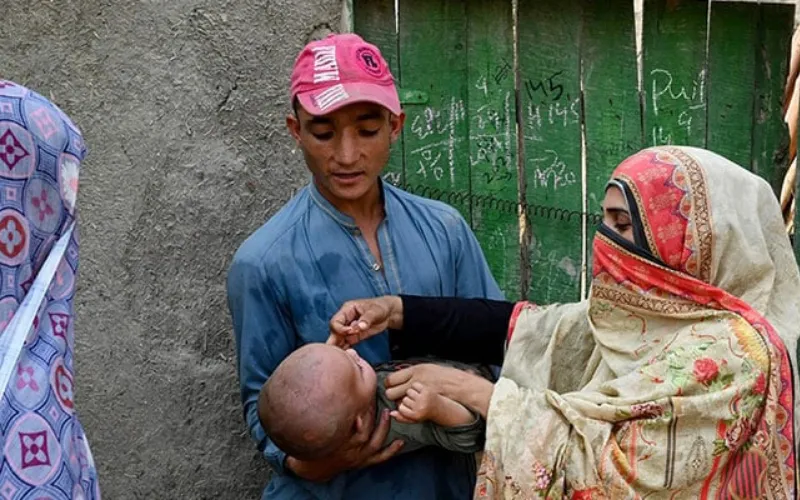
The virus was found in samples from Central, East, Keamari, Malir, South and West districts.
KARACHI: Poliovirus has been detected in environmental samples collected from all six districts of Karachi, according to the National Emergency Operations Centre (NEOC) for Polio Eradication.
The virus was found in samples from Central, East, Keamari, Malir, South and West districts. The NEOC said no poliovirus had been detected in samples collected from these six districts in June, but the virus was identified in samples collected in July.
A poliovirus-positive environmental sample was also reported from Kashmore district in Sindh during July.
Outside Sindh, environmental samples from Chaman, Dera Bugti and Quetta in Balochistan also tested positive for poliovirus. In Khyber Pakhtunkhwa, the virus was detected in samples from Bannu and Peshawar.
Rawalpindi in Punjab also reported a poliovirus-positive environmental sample in July, according to the NEOC.
More read, Pakistan confirms presence of poliovirus in environmental samples
Earlier, Pakistan has recorded a significant decline in the detection of poliovirus in environmental samples during the first half of 2026, reflecting progress in the country’s polio eradication efforts, according to the National Emergency Operations Center (NEOC).
The NEOC said the environmental positivity rate fell from 48.1% during the same period last year to 13.1% in the first six months of 2026. Between January and June, the number of positive environmental samples dropped from 369 to 100.
In June alone, authorities collected 127 environmental samples nationwide, of which 117 tested negative for poliovirus while 10 samples were confirmed positive.
Provincial data showed encouraging results, with all 31 samples from Punjab testing negative. In Sindh, 28 of 29 samples were negative, while 30 of 34 samples in Khyber Pakhtunkhwa and 18 of 23 samples in Balochistan were also free of the virus.
The NEOC said Pakistan has confirmed three polio cases so far in 2026.