

Farrukh Basir
In a country like Pakistan, where women constitute about 49 percent of the population, their representation in political parties is a reflection not only of the strength of democracy but also of social change.
Women’s political participation not only increases gender equality but also makes policies more inclusive. Historically, women’s political representation in Pakistan has been limited. Pakistan ranks lowest among 148 countries in the Global Gender Gap Index 2025, while it also ranks 95th in political empowerment. Under the Election Act 2017, political parties are required to field at least 5 percent women candidates in general elections, but implementation has been poor.
In the 2024 elections, out of a total of 6037 candidates, only 280 women (4.64%) were candidates on party tickets, while according to FAFN, only 30 parties gave tickets to 5% or more women. The history of the Pakistan People’s Party is most notable in women’s representation. During the reign of Zulfikar Ali Bhutto, the rights of women were recognized in the 1973 constitution and Benazir Bhutto became the first woman prime minister of Pakistan.
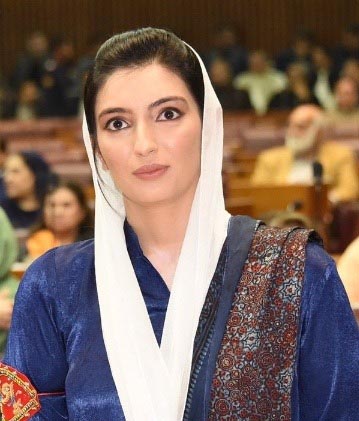
The PPP established a women’s wing, the current central president of which is Faryal Talpur. In the last elections, the PPP won 54 general seats and got 12 reserved seats for women, while 3 women, Dr. Nafisa Shah, Shazia Atta Marri and Saba Talpur, won general seats directly from NA-202 Khairpur, NA-207 Sanghar and NA-213 Umerkot respectively, while later, First Lady Asifa Bhutto was also elected unopposed in a by-election from NA-207 Benazirabad and reached the National Assembly. Similarly, 25 percent of the party’s central leadership is also women (one woman out of four central office bearers).
The PPP’s narrative of “empowering women is empowering the nation” is reflected in its policies (Benazir Income Support Program, Women Police Stations, First Women Bank). The PMLN’s central leadership has 33 percent women (two women out of six officials) who won 75 general seats in the 2024 elections and got 19 reserved seats for women, while 4 women won direct elections and reached the National Assembly. The PML-N’s party manifesto promises 30 percent female representation. But the PMLN’s leadership is based in Punjab and women are mostly limited to reserved seats. The PTI had promised a 25 percent quota and during Imran Khan’s tenure, women ministers (e.g. Shireen Mazari) were prominent. But the PTI won 93 seats in the 2024 elections through independent candidates but could not get reserved seats (due to the Election Commission’s decision). The party has limited female leadership which It is often criticized. A small party like ANP has 26 percent women in the leadership, but its impact at the national level is low, as a result of which the Pakistan People’s Party is the party with the best representation of women and the main reason for this is its historical legacy (Benazir Bhutto), consistent policies and the existence of a women’s wing. The practical achievements of the PML-N are only visible in the advertising campaign of paper projects with Maryam Nawaz’s picture, but the PPP’s narrative is more comprehensive and national. Born on February 3, 1993 in London, Asifa Bhutto Zardari did her bachelor’s degree in political science and sociology from Oxford Brookes University and her master’s degree in Global Health and Development from University College London (UCL).
In 2009, she became the ambassador of the national campaign to eradicate polio in Pakistan and even today she is working day and night to eradicate this deadly disease. She is also working on health, education and rural women’s issues and their solutions. She ran the party’s vigorous election campaign in the 2024 general elections. As The First Lady’s speech at the Global Women’s Forum went viral on social media. Young women consider her as the “continuation of Benazir”. The Pakistan People’s Party has a successful model, the People’s Youth Organization (PYO), which provides political training, leadership and a political platform at the grassroots level to the youth. If a “People’s Women Youth” (PWY) is established on the same model, which includes elected bodies at the district, provincial and central levels, training workshops, leadership camps and policy dialogues and its scope is made up of educated young women coming out of universities, and First Lady Asifa Bhutto Zardari is made its central president, then no one can stop her from getting full acceptance among the younger generation, especially women.
As the head of PWY, she can inspire thousands of young women. Her followers on social media fan pages and Instagram are in the millions who are waiting to walk under the shadow of her “graceful leadership”. Currently, women voters in Pakistan aged 18-35 The number of women voters is increasing, but the turnout of women voters was 17 points lower than that of men in 2024. Fafan reports that 3.5 million women in Pakistan are outside the voter rolls. These women commuters can be politically organized and brought into the mainstream through the platform of People’s Women Youth. Like the People’s Youth Organization, this platform, if it focuses on issues like education, health, jobs, gender violence and digital safety, will give women a sense of “your vote, your future”.
The journey of the Pakistan People’s Party from “bread, cloth, house” to “empower women” spans half a century, People’s Women Youth can make it a “charm for young women” and under the presidency of Asifa Bhutto Zardari, this platform has reached thousands of women through workshops, online forums and internship programs at the district level.