

Zubair Yaqoob
An exhibition in the city this week is inviting visitors to rethink the meaning of calendars, presenting them not merely as tools for tracking days but as reflections of culture, art, and the passage of time.
Organized by the Consulate-General of Japan in Karachi, the Japanese Calendar Exhibition 2026 opened on Monday at the State Bank Museum and Art Gallery, drawing attention from art enthusiasts, students, and families alike.
The two-day exhibition, open from April 7 to 8, features around 80 calendars curated by the Japan Calendar Publishers Cooperative Union. The collection spans a wide range of themes, from Japan’s scenic landscapes and changing seasons to modern design concepts and elements rooted in centuries-old traditions.
At first glance, the display may appear simple, but a closer look reveals a deeper narrative. Each calendar is designed not only to mark the progression of days but also to capture moments in time through carefully crafted imagery and layout.
Organizers say the exhibition is meant to highlight how, in Japan, calendars often serve as an intersection of practicality and artistic expression. The works on display reflect Japan’s long-standing cultural appreciation for nature and seasonal change. Images of cherry blossoms in spring, lush greenery in summer, vivid foliage in autumn, and serene snow-covered scenes in winter illustrate a cyclical understanding of time — one that is closely tied to the environment.
This approach, officials note, contrasts with purely functional calendar designs, offering instead a contemplative and aesthetic experience. Visitors moving through the gallery encounter a variety of styles, from minimalist compositions with clean lines and subtle color palettes to more intricate designs rich in detail.
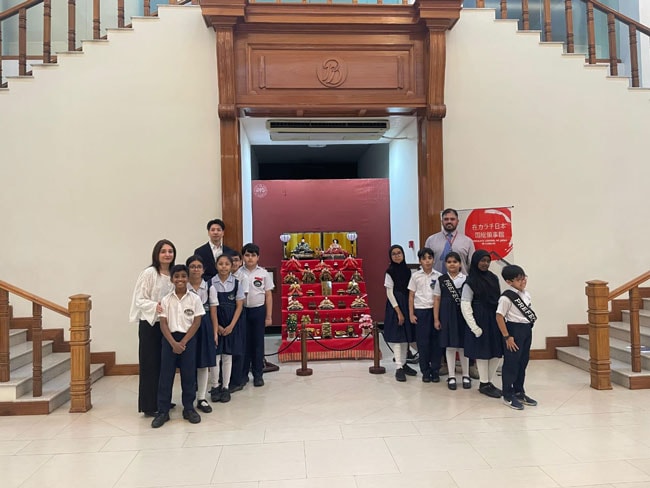
The diversity underscores the adaptability of Japanese design, which balances simplicity with depth, and tradition with innovation. The calendars demonstrate how even everyday objects can be elevated into meaningful works of art. Beyond the calendars, the exhibition also features traditional Hina Dolls, known as Hina-ningyo, displayed to commemorate Hinamatsuri, or Girls’ Day.
Celebrated annually in Japan in March, the festival centers on prayers for the health, happiness, and prosperity of young girls. The dolls, dressed in elaborate classical attire representing members of the imperial court, are arranged in a tiered display that reflects a centuries-old custom. The inclusion of Hina dolls adds another cultural dimension to the exhibition, offering visitors insight into Japanese family traditions and seasonal celebrations. For many attendees, it is a rare opportunity to witness such artifacts up close, deepening their understanding of Japan’s social and cultural fabric.
Officials at the Consulate-General of Japan say the exhibition is part of ongoing efforts to promote cultural exchange between Japan and Pakistan. By hosting the event in collaboration with the State Bank Museum and Art Gallery, they aim to create an accessible and engaging space where people from diverse backgrounds can explore Japanese culture.
The exhibition also reflects a broader trend in cultural diplomacy, where art and design serve as bridges between nations. In a fast-paced world increasingly driven by digital tools, the showcase offers a moment of pause, encouraging visitors to appreciate the artistry embedded in everyday life.
For Karachi’s residents, the Japanese Calendar Exhibition 2026 is more than a display — it is an invitation to see time differently, through a lens that values harmony, detail, and a quiet connection with nature.