

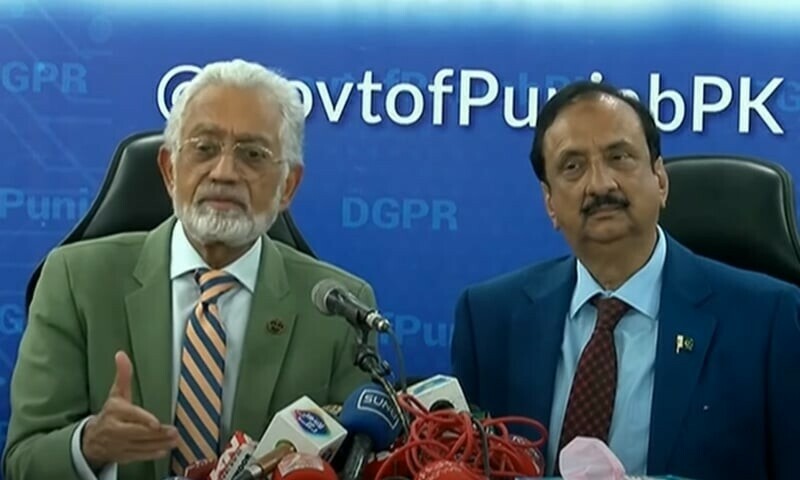
Punjab caretaker Health Minister Dr Javed Akram on Tuesday said the Avastin eye drug, allegedly responsible for causing vision loss in diabetic patients across the province, was administered without informed consent.
Several diabetic patients in Lahore, Kasur and Jhang districts were administered Avastin injections to address retinal damage, but the doses led to severe infections, ultimately resulting in the loss of their eyesight.
The diabetic patients developed a life-threatening disease, endophthalmitis, an inflammation of the inner coats of the eye, and the issue first surfaced when several cases of the drug’s reaction were reported from the Kasur district.
An initial investigation reportedly detected the chronic problems in repackaging (compounding) the Avastin drug and its supply and the maintenance of the cold chain that led to the outbreak of the disease in Punjab.
The official figures unveiled that the purported contaminated drug severely affected the vision of 68 patients in the province since the scam surfaced. There were reports that more cases were surfacing across the province and the health authorities were assessing them to make them a part of the government data.
Addressing a press conference on the matter today in Lahore, Dr Akram said the drug was ordinarily used in the treatment of cancer patients and its use in ocular procedures was not approved by the US Food and Drug Administration, Drug Regulatory Authority of Pakistan (Drap), Indian medical authorities or the drug manufacturer Roche itself.
He said the drug’s administration was an “off-label use” of the medicine, adding that it was mandatory for such use to be permitted by Drap. Akram said nothing of the sort happened in the recent matter and consent was also not taken from patients.
Adding that the drug was banned until further notice for eye administration, the health minister said: “We decided today that whenever, if, we will allow [the usage], we will give awareness to the patient, they will be fully protected and told [about the risks] and written informed consent will not be enough, we will need a recording that it the benefits and risks have been explained to the patient.
“And then if the patient agrees, then it will be used.”
Akram said there would be “zero tolerance” shown to the culprits and they would be brought to justice.
He said there were 68 cases so far with concerns of an increase, adding that data was also being collected on the people who were administered the drug in the last five years and the outcome of that.
Probe finds repackaging problems behind contamination
According to the initial inquiry, the injection was to be used within six hours of its repackaging, also called compounding.
Quoting the inquiry, an official said, the owners were repackaging (compounding) the drug/injections in a highly unsterilised environment at a laboratory situated in the basement of a private hospital in Model Town, Lahore. He said the health department teams sent the samples of the suspected drug from the Shaukat Khanum Memorial Cancer Hospital and Saira Memorial Hospital to the Drug Testing Laboratory and added that the staff assigned with the task was neither wearing gloves, nor kits designated for manufacturing of drugs.
He further lamented that the drug was being compounded in the unsterilised environment of an operating theatre.
The official had revealed that the drug in question needs to be strictly kept at -2ºC to -8ºC while stocking and transporting it to the destinations with caution to be used within 24 hours.
The experts in their inquiry report, however, had claimed that the drug was to be administered within six hours of its drawing from the vial. Unfortunately, the employees were transporting the drug on motorbikes in ice packs to maintain the cold chain in Lahore and there were also reports that the same was being sent to distant cities, including Multan, Bahawalpur, Rahim Yar Khan, Sadiqabad and Mian Channu, probably by passenger buses.
The official said 25 injections were sent to Multan alone and other cities of south Punjab where the cases of adverse reactions to the drug surfaced. The experts suggested that the government ban the transportation of such drugs from one city to another if the duration of the distance was more than three hours. They recommended that the affected patients should immediately be treated with intravitreal antibiotics with and without core vitrectomy accordingly.