
Film industry body seeks permanent restrictions on Pakistani entertainment content
India’s campaign to isolate Pakistan appears to be extending beyond water and sport into art and culture, with an Indian film industry organisation demanding a permanent ban on Pakistani entertainment content, including Netflix’s upcoming first Pakistani original series.
The All Indian Cine Workers Association (AICWA) has approached Prime Minister Narendra Modi’s government, urging it to block the Indian release of Jo Bachay Hain Sang Samait Lo, starring some of Pakistan’s biggest television and film stars, and introduce legislation prohibiting Pakistani entertainment content across streaming platforms.
In a letter dated November 24, the association called for strict legal action and penalties against over-the-top (OTT) platforms streaming Pakistani films, dramas, songs, podcasts and other entertainment content in India. It also urged Netflix and other streaming services to publicly commit to keeping Pakistani content off their Indian platforms.
The association cited a May 8, 2025, directive by India’s Ministry of Information and Broadcasting asking streaming platforms to stop showcasing Pakistani films, dramas, songs and other content.
However, the demand for a ban does not mean the series has officially been blocked. Neither Netflix nor the Indian government has announced a final decision specifically concerning the production, leaving its availability in India uncertain.
The controversy is the latest manifestation of the growing politicisation of cultural and sporting exchanges between the two nuclear-armed neighbours, particularly since Modi came to power. Bollywood, too, has increasingly become a platform for nationalist narratives and the portrayal of Pakistan as an adversary.
Tensions escalated following the May 2025 military confrontation, while India’s decision to hold the Indus Waters Treaty in abeyance after the Pahalgam attack further strained bilateral relations. Pakistan rejected the move, warning against the politicisation of a treaty governing the sharing of the Indus river system.
Sport has also remained hostage to political tensions. Bilateral cricket has been suspended since 2012-13, while encounters in international tournaments have increasingly been overshadowed by political controversies. During the 2025 Asia Cup, the teams’ refusal to exchange the customary handshake became another visible expression of the deteriorating relationship.
The latest controversy has also triggered debate in Pakistan, with social media users questioning Netflix’s approach to the two markets. Some have argued that if Pakistani entertainment is unwelcome in India, the streaming platform should also reconsider the availability of Indian content in Pakistan.
Planning Minister Ahsan Iqbal criticised the attempt to turn entertainment and sport into political battlegrounds, arguing that artistic expression and sporting exchanges should remain separate from diplomatic disputes.
Questioning how a cricket match could become a political threat and a television drama a matter of national security, he said players should be allowed to play, water should be allowed to flow and artists should be allowed to create. Audiences, he added, should have the freedom to watch content of their choice.
PPP Senator Sherry Rehman also criticised the demand, describing calls to ban Pakistani entertainment content as “pathetic”. “Nor is the average Pakistani venomous about India,” she wrote on X, adding that a deep sense of insecurity about Pakistan appeared to have taken hold of the mainstream Indian mindset.
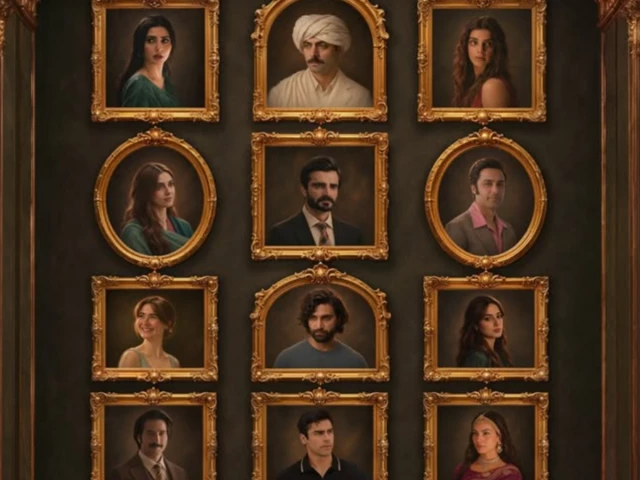
Jo Bachay Hain Sang Samait Lo is based on the bestselling novel of the same name by acclaimed Pakistani writer Farhat Ishtiaq. Directed and produced by Momina Duraid, the series weaves together three generations and six love stories.
The star-studded cast includes Fawad Khan, Mahira Khan, Sanam Saeed, Ahad Raza Mir, Hamza Ali Abbasi, Hania Aamir, Iqra Aziz and Maya Ali. Filmed across Pakistan, Italy and the United Kingdom, the production is scheduled for a global Netflix release on December 4.
As Pakistani artists increasingly find international platforms and audiences, the controversy underscores how political hostility continues to spill over into cultural spaces, threatening to turn artistic expression into another casualty of the troubled relationship between Islamabad and New Delhi.