
Gaza is a coastal strip of land that lies on ancient trading and maritime routes along the Mediterranean shore. Held by the Ottoman Empire until 1917, it passed from British to Egyptian to Israeli military rule over the last century and is now a fenced-in enclave inhabited by over two million Palestinians.
Here are some of the major milestones in its recent history.
1948 — End of British rule
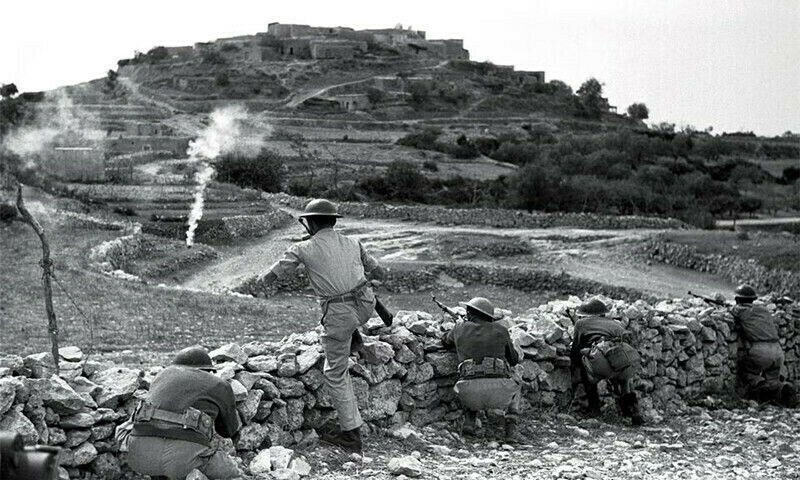
As British colonial rule came to an end in Palestine in the late 1940s, violence intensified between Jews and Arabs, culminating in war between the newly created state of Israel and its Arab neighbours in May 1948.
Tens of thousands of Palestinians took refuge in Gaza after fleeing or being driven from their homes. The invading Egyptian army had seized a narrow coastal strip 40km long, which ran from the Sinai to just south of Ashkelon. The influx of refugees saw Gaza’s population triple to around 200,000.
1950s and 1960s — Egyptian military rule
Egypt held the Gaza Strip for two decades under a military governor, allowing Palestinians to work and study in Egypt. Armed Palestinian “fedayeen”, many of them refugees, mounted attacks on Israel, drawing reprisals.
The United Nations set up a refugee agency, United Nations Relief and Works Agency (UNRWA), which today provides services for 1.6 million registered Palestine refugees in Gaza, as well as for Palestinians in Jordan, Lebanon, Syria, and the West Bank.
1967 — War and Israeli military occupation
Israel captured the Gaza Strip in the 1967 Middle East war. An Israeli census that year put Gaza’s population at 394,000, at least 60 per cent of them refugees.
With the Egyptians gone, many Gazan workers took jobs in the agriculture, construction and services industries inside Israel, to which they could gain easy access at that time. Israeli troops remained to administer the territory and to guard the settlements that Israel built in the following decades. These became a source of growing Palestinian resentment.
1987 — First Palestinian uprising. Hamas formed
Twenty years after the 1967 war, Palestinians launched their first intifada or uprising. It began in December 1987 after a traffic accident in which an Israeli truck crashed into a vehicle carrying Palestinian workers in Gaza’s Jabalya refugee camp, killing four. Stone-throwing protests, strikes and shutdowns followed.
Seizing the angry mood, the Muslim Brotherhood created an armed Palestinian branch, Hamas, with its power base in Gaza. Hamas became a rival to Yasser Arafat’s secular Fatah party that led the Palestine Liberation Organisation.
1993 — The Oslo Accords, and Palestinian semi-autonomy
Israel and the Palestinians signed an historic peace accord in 1993 that led to the creation of the Palestinian Authority. Under the interim deal, Palestinians were first given limited control in Gaza, and Jericho in the West Bank. Arafat returned to Gaza after decades in exile.
The Oslo process gave the newly created Palestinian Authority some autonomy and envisaged statehood after five years. But that never happened. Israel accused the Palestinians of reneging on security agreements, and Palestinians were angered by continued Israeli settlement building.
Hamas and Islamic Jihad carried out bombings to try to derail the peace process, leading Israel to impose more restrictions on the movement of Palestinians out of Gaza. Hamas also picked up on growing Palestinian criticisms of corruption, nepotism and economic mismanagement by Arafat’s inner circle.
2000 — Second Palestinian intifada
In 2000, Israeli-Palestinian relations sank to a new low with the outbreak of the second Palestinian intifada. It ushered in a period of suicide bombings and shooting attacks by Palestinians, and Israeli air strikes, demolitions, no-go zones and curfews.
One casualty was Gaza International Airport, a symbol of thwarted Palestinian hopes for economic independence and the Palestinians’ only direct link to the outside world that was not controlled by Israel or Egypt. Opened in 1998, Israel deemed it a security threat and destroyed its radar antenna and runway a few months after the September 11, 2001 attacks on the United States.
Another casualty was Gaza’s fishing industry, a source of income for tens of thousands. Gaza’s fishing zone was reduced by Israel, a restriction it said was necessary to stop boats smuggling weapons.
2005 — Israel evacuates its Gaza settlements
In August 2005 Israel evacuated all its troops and settlers from Gaza, which was by then completely fenced off from the outside world by Israel.
Palestinians tore down the abandoned buildings and infrastructure for scrap. The settlements’ removal led to greater freedom of movement within Gaza, and a “tunnel economy” boomed as armed groups, smugglers and entrepreneurs quickly dug scores of tunnels into Egypt.
But the pullout also removed settlement factories, greenhouses and workshops that had employed some Gazans.
2006 — Isolation under Hamas
In 2006, Hamas scored a surprise victory in Palestinian parliamentary elections and then seized full control of Gaza, overthrowing forces loyal to Arafat’s successor, President Mahmoud Abbas.
Much of the international community cut aid to the Palestinians in Hamas-controlled areas because they regarded the group as a terrorist organisation.
Israel stopped tens of thousands of Palestinian workers from entering the country, cutting off an important source of income. Israeli air strikes crippled Gaza’s only electrical power plant, causing widespread blackouts. Citing security concerns, Israel and Egypt also imposed tighter restrictions on the movement of people and goods through the Gaza crossings.
Ambitious Hamas plans to refocus Gaza’s economy east, away from Israel, foundered before they even started.
Viewing Hamas as a threat, Egypt’s military-backed leader Abdel Fattah al-Sisi, who took power in 2014, closed the border with Gaza and blew up most of the tunnels. Once again isolated, Gaza’s economy went into reverse.
Conflict cycle
Gaza’s economy has suffered repeatedly in the cycle of conflict, attack and retaliation between Israel and Palestinian fighters.
Before 2023, some of the worst fighting was in 2014, when Hamas and other groups launched rockets at heartland cities in Israel. Israel carried out air strikes and artillery bombardment that devastated neighbourhoods in Gaza. More than 2,100 Palestinians were killed, mostly civilians. Israel put the number of its dead at 67 soldiers and six civilians.
2023 — Surprise attack
While Israel was led to believe it was containing a war-weary Hamas by providing economic incentives to Gazan workers, the group’s fighters were being trained and drilled in secret.
On Oct.7, Hamas fighters launched a surprise attack on Israel, rampaging through towns, killing hundreds, and taking dozens of hostages back to Gaza. Israel took revenge, hammering Gaza with air strikes and razing entire districts in some of the worst blood-letting in the 75 years of conflict.