
Despite years of immense sacrifices, the genie of militancy has once again emerged from the bottle, this time armed with advanced weaponry and tactics, posing a formidable challenge.
At least 25 soldiers were martyred and 27 terrorists killed in three separate incidents in Khyber Pakhtunkhwa’s Dera Ismail Khan on Tuesday. While all three incidents took place within hours of each other, the deadliest was an attack on a security forces’ check post which claimed the lives of 23 soldiers.
The attack is one of the deadliest in Pakistan’s recent history — which has seen an uptick in militant activity after a brief lull some time ago — and comes just four days before the ninth anniversary of the Army Public School massacre in Peshawar, which claimed the lives of 144 students and staff members. But what has brought about this resurgence?
Following countless military operations over almost a decade, resulting in thousands of casualties among both security forces and innocent civilians caught in the crossfire, we were led to believe that militancy in Khyber Pakhtunkhwa was finally over. Phrases like ‘enemies neutralised’ and the ‘era of peace has started’ started bouncing off television tickers and posts on social media.
But even as the mainstream hailed these developments, residents of KP, including those living in the erstwhile Federally Administered Tribal Areas (Fata) — which were later rebranded as merged districts — remained sceptical about the complete eradication of militancy in the region.
Their scepticism was rooted in the persistent loss of life, occurring in different parts of the province under various circumstances and timelines.
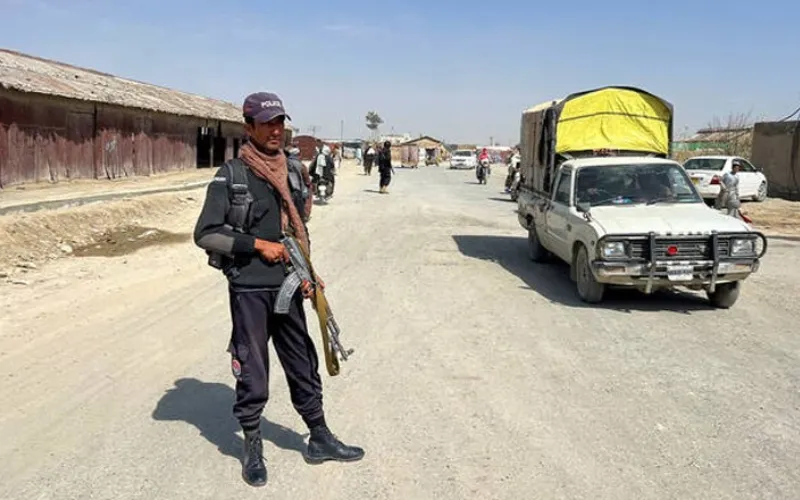
In recent years, KP has witnessed a sharp spike in attacks throughout the province, particularly in its southern region, comprising districts Tank, DI Khan, Kohat, North Waziristan, South Waziristan, Bannu, Karak and Lakki Marwat. In fact, between June 18, 2022, and June 18, 2023, 665 militant attacks were carried out in KP, according to the provincial police.
The highest number of these attacks were reported in DI Khan at 81, followed by Peshawar at 56 and Bajaur at 51. So why does DI Khan stand out when it comes to militancy?
The backwaters
The region comprising southern KP, which also includes DI Khan, is blessed with a rich and diverse landscape, including deserts, forests, plains, and mountains. Its resilient population is known for its ability to endure various challenges to earn their livelihoods. However, these very people have also suffered a prolonged history of neglect and abandonment by both Peshawar and Islamabad over the years.
Decades of neglect in all sectors, ranging from education to healthcare, basic infrastructure, energy, extreme poverty, and lack of employment opportunities at various levels have naturally created a fertile breeding ground for militants to recruit these “lost youth”, if one can call them that.
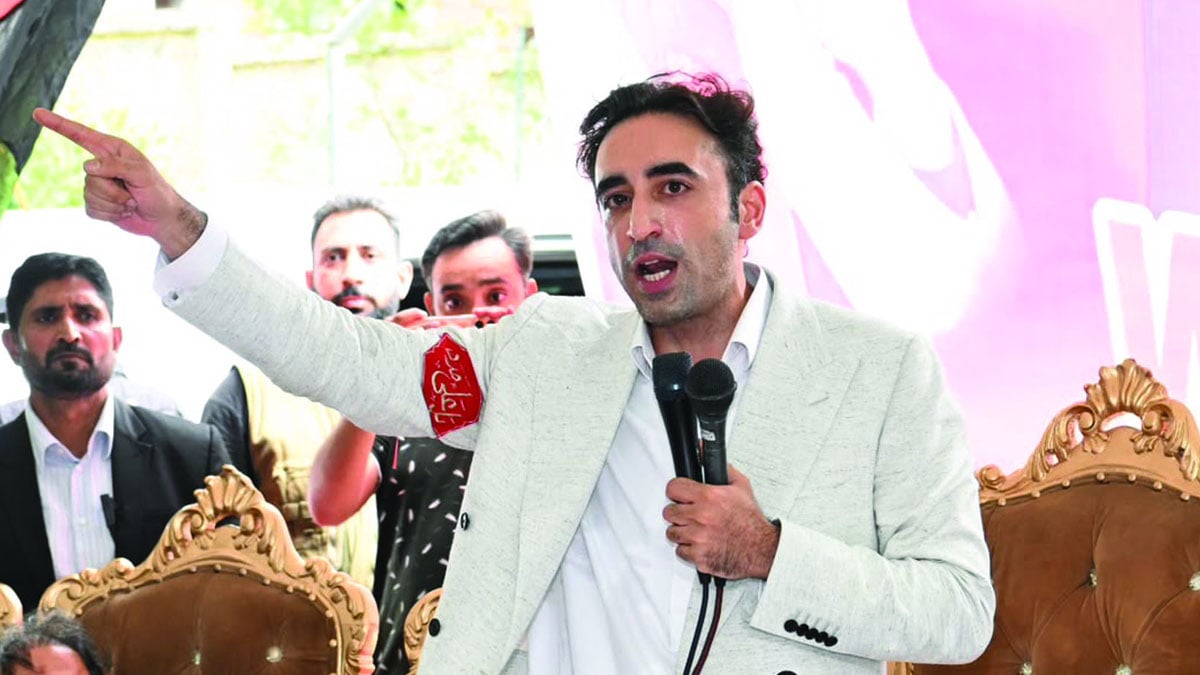
In these parts of the province, senior governmental officials and politicians arrive, particularly before each election cycle, and engage in public meetings with locals, where their media teams capture photos, presenting their visit as if they travelled to an otherworldly place and met with celestial beings.
In reality, however, the well-being and progress of the people of southern KP do not appear to hold any priority for these officials and politicians.
Tunnel vision
One of Pakistan’s biggest problems lies in the prevalence of “blind adhocism” at policy-making levels. Instead of thoughtfully designing actions and, as one would expect from intelligent decision-makers, anticipating and preparing for the consequences of those actions, we tend to favour short-term solutions that merely serve as cosmetic fixes and fail to address the core issues at hand.
For instance, while the frequency of attacks and the number of dead and injured have risen to levels reminiscent of peak militancy days, the most alarming aspect is the increased sophistication and organisation of the current generation of militants. This younger lot is tech-savvy and plans their attacks far more diligently than the militants of the early and mid-2000s, who came in high numbers to mount attacks and suffered heavy casualties at the hands of security forces in the process.
Yet, law enforcement agencies, particularly the Federal Investigation Agency — under whose ambit cyber crimes fall — remain woefully under-equipped and much of the legislation in this sector appears to do little to mitigate these threats largely due to a lack of understanding of the changing landscape among the lawmakers.
Another important element of the rapidly deteriorating security situation is the extra burden of “political engineering” thrust upon the shoulders of the police and intelligence agencies, who instead of using their resources to combat militancy and maintain law and order, are involved in other activities.
The resultant erosion of public sympathy for the police and security forces poses a long-term threat, as this already beleaguered force relies heavily on public support, not only for morale but also for operational effectiveness.
Social media has also vastly changed the landscape of information sharing, bringing both benefits and drawbacks. Over the years, militant groups have refined their narrative-building techniques, significantly enhancing their capabilities in this domain. Many of these outfits now increasingly rely on social media platforms, particularly those offering encrypted services such as Telegram and Signal, to amplify their voices, run recruitment drives, educate their followers on protecting anonymity and even train them in militant tactics.
Meanwhile, the state’s actions have been limited to producing and sharing songs and drama serials that find little traction among a populace that already resents it. It is a globally acknowledged fact that narrative building cannot be solely confined to official channels — public engagement is crucial for broader acceptance. Unfortunately, the state is rapidly losing ground in this critical arena.
On the other hand, even as considerable infrastructure development, particularly on roads, was achieved during the ‘War on Terror’, it was not enough to satisfy the population’s basic needs. For decades, the government constructed “ghost facilities” in ex-Fata, including schools and hospitals, as political incentives for garnering local support. These facilities, often built in impractical locations or lacking necessary resources, remain underutilised or abandoned.
On a tactical level, a senior security official stationed in a critical district of southern KP expressed serious concern about the lack of essential resources to effectively combat the well-trained and equipped fighters belonging to various factions of the Pakistani Taliban.
“If I show you the equipment I have been given by my force in the district, you would be shocked. My district is at the forefront against militancy, and I can fairly claim that my district has the most minimum resources in the entire KP province,” he said, during a recent interaction.
The officer expressed concern over the lack of resources for material escort operations, even though officials in Peshawar receive advanced counterterrorism equipment and technology on a monthly basis. He questioned where this equipment ends up, suggesting that it is not being used effectively.
This year, the two deadliest attacks in KP — the suicide attack on the Police Lines mosque in Peshawar in January, 2023, and the one in Daraban, DI Khan a day ago — brought out another important aspect that is oft-ignored in the discourse on militancy. While the Peshawar attack was “Istishadi” — carried out through a body-borne improvised explosive device (BBIED), resulting in a loss of over 80 police officials, the Daraban attack was was “Inghimasi” — carried out through a vehicle-borne improvised explosive device (VBIED) — resulting in a loss of 23 military personnel.
According to officials, in both these attacks, many of the deaths were not caused directly by the explosion, but were in fact caused by the buildings collapsing.
This may be the indirect cost of corruption in construction of such facilities with substandard materials, design and structuring — in order to mint money, contractors and engineers build public buildings with substandard material and structure, making them so vulnerable that the shockwave of a blast alone destroys the walls and causes the roof to cave in, resulting in numerous deaths.
Where do we go from here?
Days after the APS massacre, the nation banded together and pledged: “Never again”. Soon after, Pakistan developed a National Action Plan to combat terrorism. Almost nine years later, we find ourselves at the same point all over again. So where do we go from here?
For starters, let’s not play Nero’s Fiddle under the false assumption that all is well. It is not.
Those who offer critical and independent perspectives and analyses are often silenced rather than consulted for policy formulation. Officials in these regions prefer to suppress any undesirable occurrences within their jurisdictions to protect their careers.
Despite years of immense sacrifices, the genie of militancy has once again emerged from the bottle, this time armed with advanced weaponry and tactics, posing a formidable challenge.
Cosmetic actions such as hosting jirgas at deputy commissioner’s offices won’t resolve these issues, as Pakistan requires a comprehensive national dialogue, not just limited to local discussions.
While politicians must be held accountable for various shortcomings, they remain the most actively engaged individuals with firsthand understanding of the ground realities. They should, therefore, be entrusted with a leadership role in both peace negotiations and military operations. This necessitates unity among all political parties, state institutions, and the nation as we confront the war that is upon us.