

Qaseem Shah:
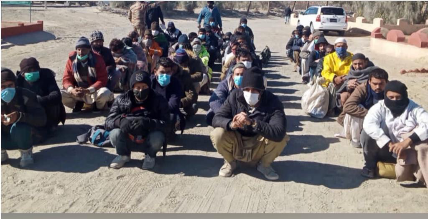
QUETTA: Security forces have detained 58 Afghan nationals, including women and children, in Balochistan while they were allegedly attempting to travel to Iran and Europe through Pakistan, according to security sources.
The Afghan nationals were reportedly detained in the Dasht Marani area of Balochistan, where security personnel foiled an alleged attempt to facilitate their onward journey.
Following the operation, the detainees were handed over to the relevant police authorities for further legal proceedings.
According to the sources, the group was seeking to travel through Iran and Turkey before reaching Europe, including Greece. Further details about the identities of those detained and the legal proceedings were not immediately available.
Pakistan-Iran-Turkey Route Used by Migrants Seeking Europe
The detention highlights the wider issue of irregular migration routes connecting Pakistan, Iran, Turkey and Europe. Thousands of Pakistani and Afghan nationals have used these routes in attempts to reach European countries, with Greece serving as one of the destinations along the eastern Mediterranean migration corridor.
Migration research has documented journeys in which migrants travel from Pakistan through Iran and Turkey before attempting to enter Greece. Some migrants are intercepted or returned during transit, while others reach Europe. The risks include detention, exploitation by smuggling networks and dangerous land or sea crossings.
Every year, many Pakistani and Afghan nationals reportedly make repeated attempts to reach Europe through Iran and Turkey. However, the exact number of people who make two or more attempts annually, and the proportion intercepted in Iran or Turkey versus those reaching Greece, should be verified through official migration statistics before being presented as a confirmed figure.
A 2026 International Organization for Migration (IOM) update recorded irregular arrivals from the Asia-Pacific region in Europe and identified the Eastern Mediterranean route, including Greece, as a significant pathway. The data demonstrates the continuing movement along these routes but does not establish the specific annual number of Pakistani and Afghan nationals making repeated attempts
